
Essential Dental Systems
Innovative Dental Products
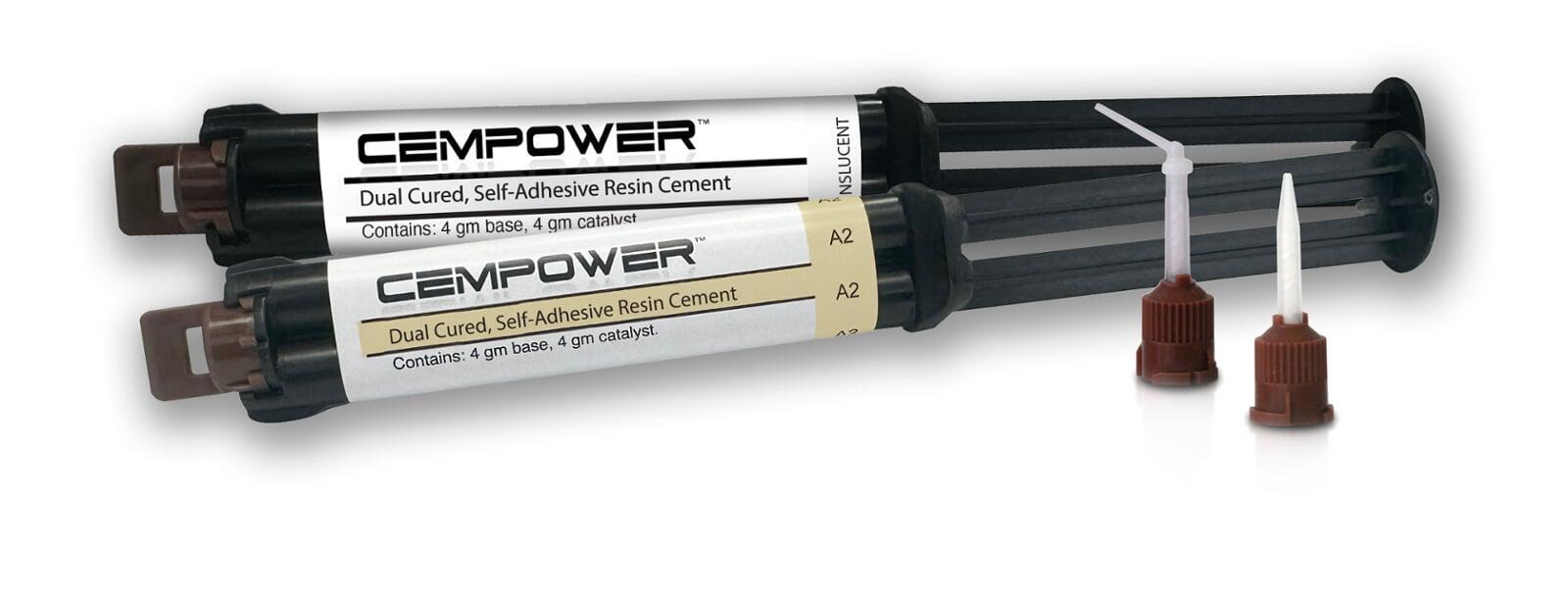
Cempower Adhesive Syringes

Cempower Self Adhesive Cement

CemPower is a self-etch, self-adhesive, dual cured resin cement. This user-friendly cement is ideal for restorations made of zirconium oxide, lithium disilicate, other metal-ceramics and for the cementation of high-strength restoratives on implant abutments.


Buy Now and Save

The EDS formula brings a host of transformative enhancements to CemPower, setting a new benchmark for dental restoration materials. Some of the remarkable features introduced through the EDS formula include:

New Rheology:

Providing smoother and more precise handling.

Latest Generation of Adhesive Monomers:

To establish a superior bond with substrates, offering lasting adhesion.

Advanced Fillers:

To simplify the mixing process while significantly enhancing bond strength across diverse substrates.

Moisture Tolerance:

To guarantee exceptional adhesion even in moist environments.

Effortless Excess Removal:

After curing, the excess material is easily removed, streamlining the final steps of the restoration process.

Long-Term Hydrolytic Stability:

The proprietary blend of Bis-GMA free monomers ensures superior long-term hydrolytic stability.
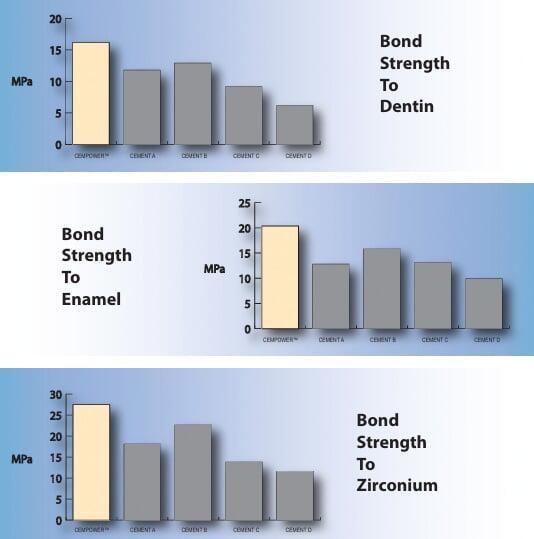
Retention Graphs for Cempower
Product Resource Center

 Product Profile

Dentist Review

Cementation Article

Instructions

Cempower Q&A

Applying pumice and water to the tooth to be treated is to clean the surface, and if the surface is not clean, the adhesion may be reduced by foreign substances.

Yes, The universal cleaning paste Ivoclean effectively cleans the bonding surfaces of prosthetic restorations after intraoral try-in and thus creates optimum prerequisites for the adhesive luting procedure.

Ethylenediamide tetraacetic acid (EDTA) is a chelating agent which combines with the calcium ion and inactivates it, thereby exerting its decalcifying effect on dentine. Theoretically, the higher concentration of EDTA should facilitate the infiltration of resin cements into the dentinal tubules, since the chelating action of EDTA significantly promotes their cleaning. However, the solution excessively removes the dentin matrix, causing collagen fibrils to collapse and compromising the interaction of self-adhesive resin cement with the radicular dentin. In conclusion, the application of EDTA can reduce the adhesion of self-adhesive resin cement to dentin.
Hydrogen peroxide can inhibit the polymerization of self-cure resin cement.

You can edit text on your website by double clicking on a text box on your website. Alternatively, when you select a text box a settings menu will appear. your website by double clicking on a text box on your website. Alternatively, when you select a text box

Making informed decisions on the selection of the correct cement for specific clinical cases in restorative dentistry is critical for ensuring the longevity, function, and aesthetics of the restoration. Both self-adhesive resin cements and universal resin cements are among the most widely used in dentistry for the facile cementation of various restorative materials such as crowns, bridges, and veneers. However, a few noteworthy differences between them that are important for clinical consideration must include adhesive properties, usability, and indications for use.  Self-adhesive resin cements, like CemPower TM, contain adhesive components within its formulation, improving usability and allowing them to bond to tooth structure as well as restorative materials without the need for separate adhesive primers or bonding agents. Universal resin cements typically require a separate adhesive bonding step, where a bonding agent or primer is applied to both the tooth structure and the restoration before cementation. While certain commercially available universal resin cements may offer higher bond strengths due to the use of separate adhesive bonding steps, CemPower TM can also be used along with a bonding agent, for the more challenging clinical situations where mechanical retention may be limited, i.e., non-retentive preps. To ensure optimal outcomes for their patients, Dentists must evaluate each clinical case individually and choose the most appropriate, latest-generation cements as well as bonding techniques.